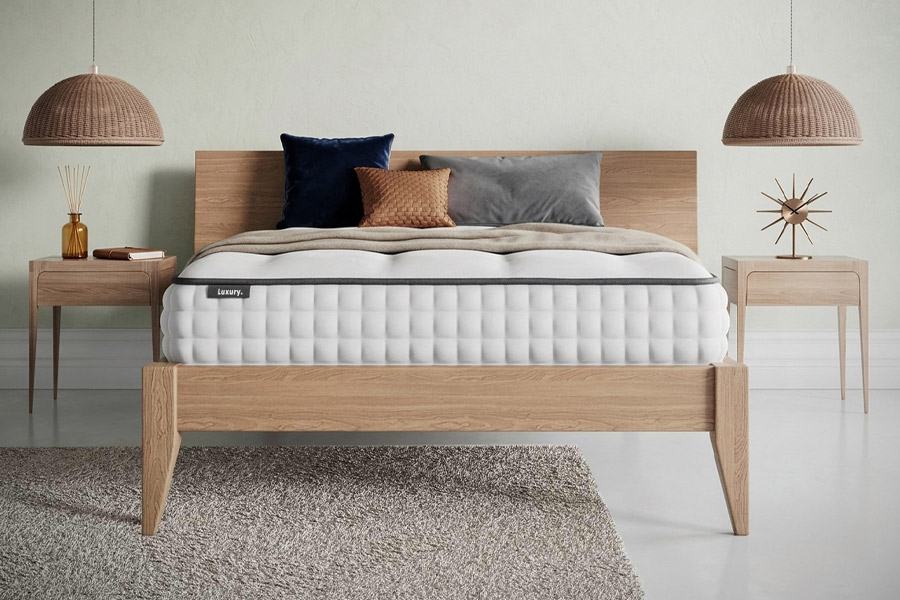
Choosing a mattress is a vital decision, as having one that provides the correct support can improve sleep quality significantly, which has a positive effect on your overall health. Let’s help you cut through the maze of mattress options to find the best one for you.
The average lifespan of a mattress is around 7-10 years, although factors like its material or if you use a topper with it, all affect how long it can last. When it is time for a change, your body often communicates it isn’t right for you, long before any visible signs like sagging or springs poking through. Here are a few telltale signs that many people experience that you should look out for:
Morning stiffness: You’ve got stiff joints or a ‘heavy back’ in the morning that only eases once you begin moving around.
Numbness or Tingling: You’re waking up with pins and needles in your arms or legs. This is often caused by high pressure areas where the mattress is too firm for your body shape.
Restless Nights: Constant tossing and turning is often the body’s involuntary attempt to find the spinal alignment that a worn out mattress can no longer provide.
Having the occasional bad night doesn’t mean that you require a new mattress. However, if your discomfort happens every morning, regardless of your daily activities, then this could be the sign you’re no longer getting the support you need for the best night’s sleep. Therefore, getting a new mattress might be the best option for you.
Years of matching our customers with their dream mattress has helped us break down the important things you need to think about when finding the one that suits your needs.
Spinal Alignment and Posture
A mattress should act as a reset for your body. The best sleep happens when your spine remains in a neutral, straight line, just as it would be if you were standing with perfect posture. In practice this means keeping your spine, neck, and hips in a neutral position whilst you sleep.
If a mattress is too soft, your hips may sink and bow your back. A mattress that is too firm, particularly if you’re a light sleeper, can actually cause more back pain by pushing the spine out of alignment. The goal is a sturdy, supportive environment that enhances comfort and allows your posture to recover from the day's stresses.
If you’ve ever woken up wondering why your shoulders or hips ache, you’ll understand the importance of your main sleeping position. The ideal sleeping position differs from person to person, and that substantially impacts what mattress suits your body type. Although it is rare for people to fall asleep and wake up in the same position, it’s about focusing on which position you’re most often in throughout the night.
Our guide on different sleeping positions gives you the detailed lowdown on how much it impacts your sleep, but here’s a quick summary of the most popular positions:
For side sleepers, the shoulders and hips act as major pressure points. Without proper contouring, these areas take the brunt of your weight, which often leads to interrupted sleep and morning soreness.
For back sleepers, the lower back (lumbar) and the base of the spine are the primary focus. Without a mattress that maintains a neutral curve, your hips can sink too far, putting strain on your lower back and preventing muscles from fully relaxing.
For front sleepers, the chest and pelvis are the main points of contact. A mattress that is too soft will cause your torso to dip, arching your back and neck into an unnatural position that often leads to waking up with stiffness or aches.
Top Tip: If you change positions frequently (called combination sleeping), a medium firm mattress often provides the best versatility.
Pregnancy
As you wait for your little bundle of joy to arrive, sleeping can get very difficult - particularly in the third trimester. The NHS recommends that pregnant mothers should fall asleep on their side (it doesn’t matter whether it is left or right). Putting pillows under the bump and between your legs can also help give you more comfort too.
Serious chronic conditions are a common cause of poor sleep. Across the UK, it’s estimated that 1 in 6 people have arthritis, and 1 in 25 have fibromyalgia, where restlessness, or lack of sleep, is often cited as a common symptom. This is just a small sample of conditions, as there are various other conditions that also impact sleep, leading to a loss of quality or enjoyment of the day ahead. Although a mattress can’t cure sleepless nights completely, getting a mattress that offers you the right level of support is key to giving anyone with a chronic Illness the best chances of a peaceful night of rest.
Research shows that having a medium-firm feeling mattress can provide the right level of support for chronic conditions, although this will differ from one condition to the next. This is because it allows the muscles and joints to fully relax, without putting additional strain on them.
Body shape
Bodies come in all shapes and sizes and that can directly determine how ‘firm’ a mattress feels. Someone with a higher body weight may experience a mattress differently than someone with a lower body weight, as they’ll tend to compress and sink into the materials to a different degree.
Sharing with a partner
All the previous factors can make choosing the right mattress challenging enough on their own, but when your partner’s needs are completely different, the decision can become even more tricky, with an entirely new set of considerations to take in account Here are the most common we hear about:
Motion Isolation: Being woken up when a partner turns over. You want a surface that isolates motion, ensuring that movement on one side of the bed doesn't create a ‘bounce’ that travels across to the other.
Weight Differences: If there is a significant weight difference between you and your partner, a mattress without the right internal support can cause you to roll together into the middle of the bed.
Choosing a mattress with independent support, such as pocket springs, or memory foam, allows each side of the bed to react specifically to the person sleeping on it. This ensures that both people get the right level of sinkage and spinal alignment, regardless of their body shape.
One of the most common mistakes is assuming that firm means supportive. Support comes from the mattress's internal core (like the springs), whereas firmness is the ‘feel’ of the top comfort layers. To find your match, you must balance your weight with your preferred position:
Soft / Medium-Soft: Best for lighter individuals or dedicated side sleepers who need to sink in enough to keep the spine straight.
Medium-Firm: Often called the ‘universal feel,’ this is the sweet spot for back sleepers and those who change positions frequently.
Firm: Ideal for stomach sleepers and those with a heavier build (typically over 15 stone) who require more surface resistance to prevent bowing.
Top Tip: Always consider ‘subjective firmness’. A mattress that feels medium to someone with a heavier build will often feel firm to someone with a lighter frame.
A pocket sprung mattress consists of individual springs sewn into their own fabric pockets, allowing them to move independently to contour to your body shape.
Pros | Cons | Great for |
|
|
|
Memory foam uses your body heat to soften and mould to your exact shape, providing a ‘cradled’ sensation that removes pressure from your joints.
Pros | Cons | Great for |
|
|
|
Latex is a premium, resilient material harvested from rubber trees, offering a naturally hypoallergenic and highly durable sleeping surface.
Pros | Cons | Great for |
|
|
|
Open spring mattresses use a continuous wire coil system and are often the most lightweight and affordable option available.
Pros | Cons | Great for |
|
|
|
As well as choosing the right type of mattress, it’s worth investing in quality materials, so you get the consistent support you need, year after year. Choosing one of our mattresses means you can sleep that little bit more soundly each night knowing you’re covered by our 8 year guarantee and that we're fully BS 7177 compliant. Not only that, but as you’re buying directly from us, you’ll get the premium quality without the high street markup. This means over the lifetime of your mattress, it’ll cost you pennies per night for a great night’s sleep, making it a total no-brainer.
For that added peace of mind, we also offer a 100 day trial on selected mattresses too, so you can make sure you’ve made the right decision.
To help you get the best possible sleep, we recommend pairing your mattress with a mattress protector to guard against allergens and moisture. They come particularly in handy during the summer months when hayfever is at its peak and you’re also more prone to sweating.
A high quality mattress can do wonders for your sleep, but a topper can be the finishing touch. It lets you fine tune the feel to suit your needs, enhances the performance of the mattress underneath, and can even help extend its lifespan.
We’ve also put together a super useful mattress care guide that will help you to keep it looking brand new and in great shape for years to come.
A mattress is only as good as the surface it sits on. Bed slats should be no more than 75mm apart to help your mattress provide the optimum level of support you deserve. Our handmade wooden frames are designed with sturdy, responsibly sourced solid wood to provide a flat, breathable base that prevents sagging and allows the mattress to perform as intended for years to come.
Choosing the right mattress is a personal journey and we get that it can be overwhelming. Should you need any further guidance please don’t hesitate in getting in touch and let us help you.

WE VALUE YOUR PRIVACY
We use cookies to enhance your browsing experience, serve personalised ads or content, and analyse the traffic with 3rd party services. By clicking ‘Accept’, you consent to our use of cookies, visit our Privacy Policy and our Cookie Policy for more info.
Please select one of the delivery countries below or navigate to our UK website for UK delivery options.
Note: International shipping prices are charged per bed rather than per order. This is due to the bulky nature and weight of these products.